
Get Healthy!
- Posted February 26, 2026
Could Drone-Delivered Defibrillators Save Lives?
Can a high-tech drone be the difference between life and death if you go into cardiac arrest?
That’s the question a groundbreaking clinical trial in a corner of North Carolina and Virginia is setting out to answer.
"By integrating drone technology into emergency care, we’re working to close the critical gap between cardiac arrest and treatment, and that has the potential to save thousands of lives," said principal investigator Dr. Monique Starks, an associate professor at Duke University School of Medicine in Durham, North Carolina.
Duke is one of more than a dozen partners in the study, which is supported by the American Heart Association (AHA).
Every year, according to the AHA, more than 417,000 people in the U.S. die from cardiac arrest, when the heart suddenly stops beating. Most were at home without access to a portable device that can be used to get the heart going again.
If an automated external defibrillator (AED) can be used within two to three minutes of a cardiac arrest, as many as 70% can survive, previous studies have shown. But EMS often takes eight to 10 minutes to arrive, according to Duke.
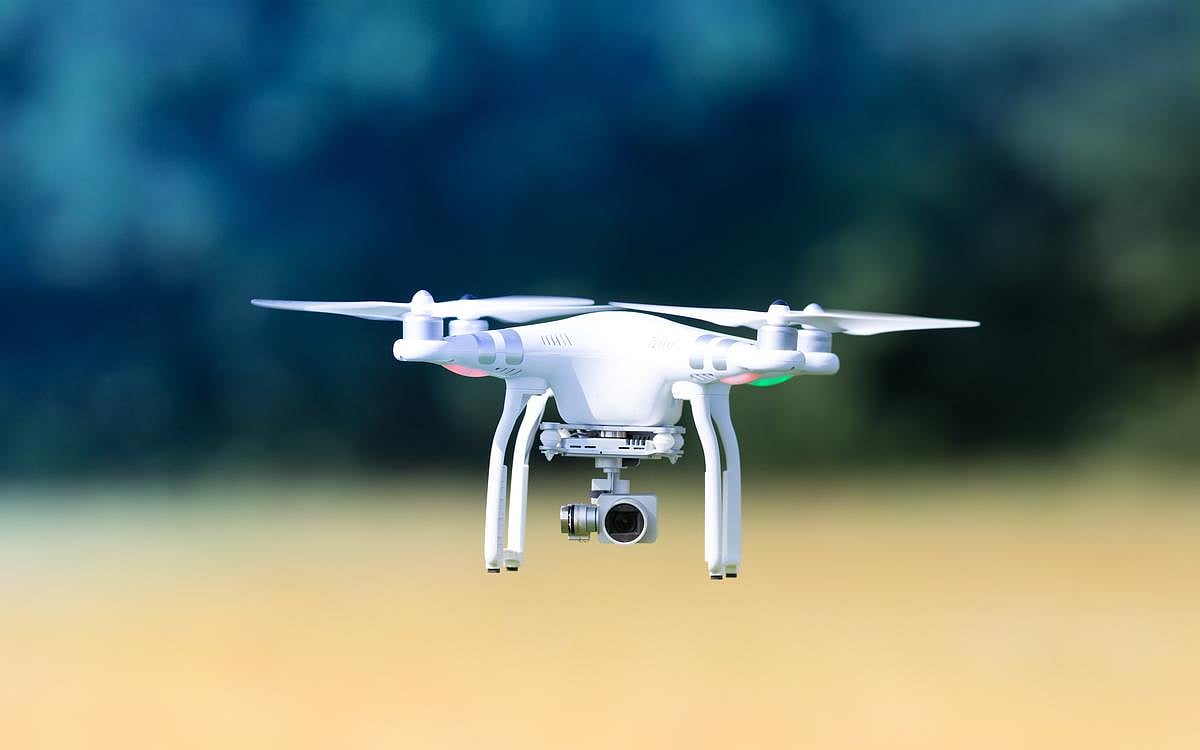
Enter the drone — an unmanned flying machine better known for dropping Amazon orders on the front porch.
"When seconds matter, this technology gives us the ability to reach people in need faster than ever before," said Bobby Kimbrough Jr., sheriff in Forsyth County, North Carolina, where drone-delivered AEDs are being tested as part of 911 response.
"Launching drone-delivered AEDs is a promise to our citizens that their safety and quality of life are paramount," he said in a Duke Health news release.
Kimbrough’s department was already using drones in law enforcement, so its involvement in the experiment was a natural extension.
The trial is happening in Clemmons, North Carolina, a small town near Winston-Salem, and also includes James City County, in Virginia.
Here’s how it works: When someone in Clemmons calls 911 to report a cardiac arrest, an AED-carrying drone is immediately launched. EMS crews are also deployed.
The 911 dispatcher coordinates operations with a pilot who sends an unmanned drone to the patient. It flies at 200 feet, drops to 100 feet, and the AED is guided safely to the ground. By phone, the 911 dispatcher tells the caller how to collect and use the device.
The aim: To deliver AEDs in less than five minutes for more than half of people in the study area.
"This project is laying the groundwork for what we hope will become a large, multi-center randomized clinical trial," said Dr. Joseph Ornato, a professor of emergency medicine at Virginia Commonwealth University and a principal investigator on the study.
"That future research will help us understand critical questions about how well this works, what it costs, and how we can get AEDs to people as quickly as possible whether they live in a city or rural community," he added.
Study partners include Emory University, the University of Washington, the University of Toronto and HoveCon Consulting, a company involved in unmanned aerial transport.
Betsy Sink, batallion chief at James City County Emergency Medical Services, said drones can "meaningfully shorten" the critical moments between collapse and care.
"They won’t replace traditional response systems, but they can strengthen them by placing lifesaving equipment in the hands of bystanders when it matters most," she said. "This project allows us to better understand how far this innovation can go in improving survival and will shape the future of emergency medicine."
More information
The Journal of the Society of Laparoscopic & Robotic Surgeons has more about the medical uses of drones.
SOURCE: Duke Health, news release, Nov. 19, 2025


